Often, yes. If the decay is confined to a sill, a lower corner or part of a sash, a specialist may be able to replace the damaged section and retain the sound original timber. The decision depends on how far the rot extends, whether the joints are still sound and where water is getting in.
For owners of period homes in Ongar, Brentwood and across Essex, that distinction matters. An original window can contain mouldings, slender glazing bars and historic glass that give the elevation much of its character. A carefully fitted repair can preserve those details and give the window a sound surface for redecorating.
How can you tell whether an old timber window is repairable?
Look closely at the ends of the sill, the lower corners of the frame and the bottom rail of each sash. These are places where water can collect or enter through open joints and gaps in the paint or glazing putty. Flaking paint may be a sign that the coating has failed. Soft timber, a joint that moves or a sash that has dropped calls for closer inspection.
A specialist will look beyond the visible patch to establish how far the decay extends and whether there is enough sound wood to support a repair. A sill can look poor while most of the frame is still in good condition. A small patch of peeling paint can also conceal decay deeper in a joint. An inspection helps determine what to retain before the scope is agreed.
What is a timber splice repair?
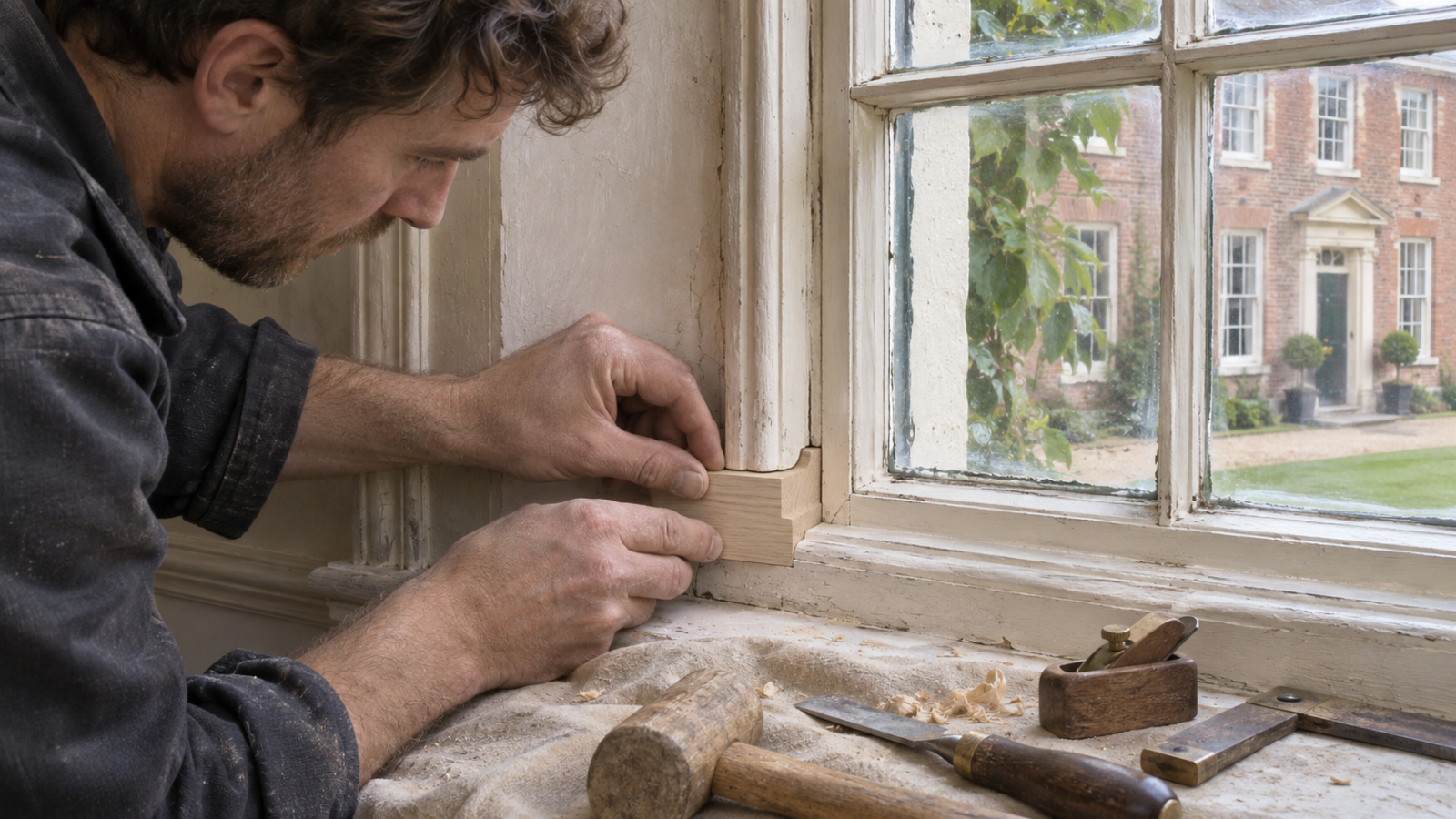
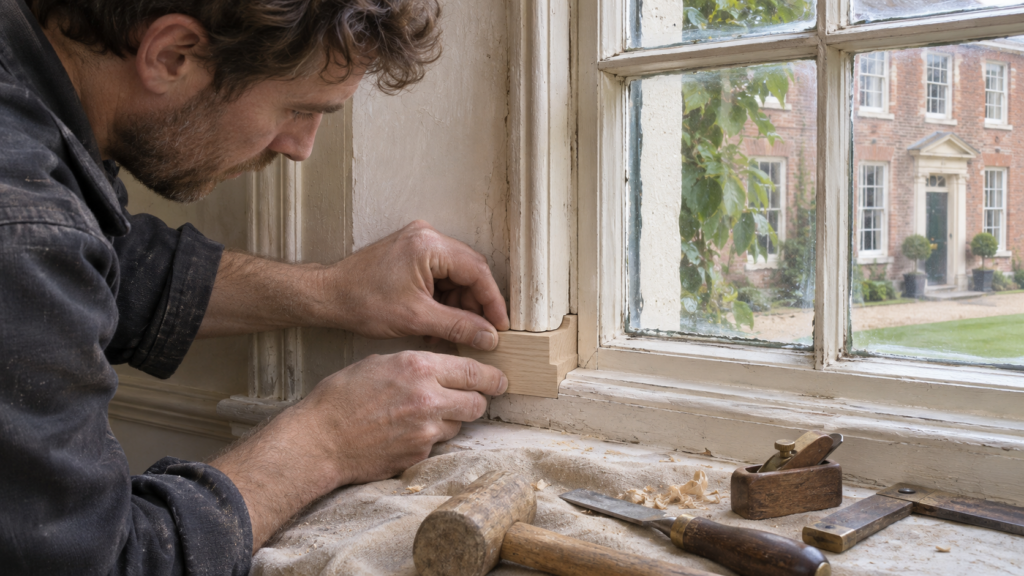
A splice repair involves removing decayed timber back to sound wood and fitting a new piece shaped to match the original. On a moulded sill or sash, the repair needs to follow the existing profile so that the line of the window reads cleanly once painted. Where the decay is small and shallow, a compatible local repair may be appropriate. More extensive damage may need a larger section of joinery renewed.
On HarriDec’s listed Georgian house restoration, the team used hardwood splices in decayed areas and kept the salvageable original glass. The project also involved renewing failed glazing putty and applying a traditional linseed oil paint finish.
Can you keep the original glass and fittings?
Often, yes. Sound historic glass, catches and other fittings can be retained where their condition allows. Slight ripples in old glass are part of its appearance and are especially noticeable when several panes catch the light together. If a pane is broken, matching restoration glass may help the replacement sit comfortably alongside the originals.
Curved bays need particular care because the shape of the joinery is part of the design. HarriDec’s curved bay window restoration shows the kind of period feature worth assessing individually before deciding how to proceed.
What stops the rot from coming back?
The repair needs to address how moisture reached the timber. Depending on the window, that could mean renewing failed putty, dealing with an open joint or correcting a detail where water sits instead of draining away. If there is a leak above the window, that needs attention before the joinery is redecorated.
Once the timber is ready, the decorator can choose a compatible finish for the existing joinery and any new sections. Ask for an aftercare plan that explains what to look for at the sill ends, glazing edges and joints. Catching a split or an open seam early can make the next round of maintenance much smaller.
When might part of the window need replacing?
If decay extends through several structural joints or there is too little sound timber to hold a splice, a new sill, rail or sash may be needed. The frame, other sashes, glass or fittings may still be worth retaining. Ask for the proposed scope to identify which parts can stay, which need repair and which need renewing.
Timber window restoration for period homes in Essex
HarriDec specialises in heritage restoration and fine decorating for historic buildings. If you’ve found soft timber or failing paint on an original window, send a photo of the full window and close-ups of the affected areas when you contact HarriDec to discuss your restoration.