Your decorating brief should establish:
- Which original features will be retained and protected.
- Which defects need investigation before decorating.
- What preparation and repairs are included.
- The proposed colours and finishes.
- The order of work and arrangements for protecting furniture and floors.
These decisions make quotations easier to compare and help everyone understand the intended result.
Should damaged original features be repaired or replaced?
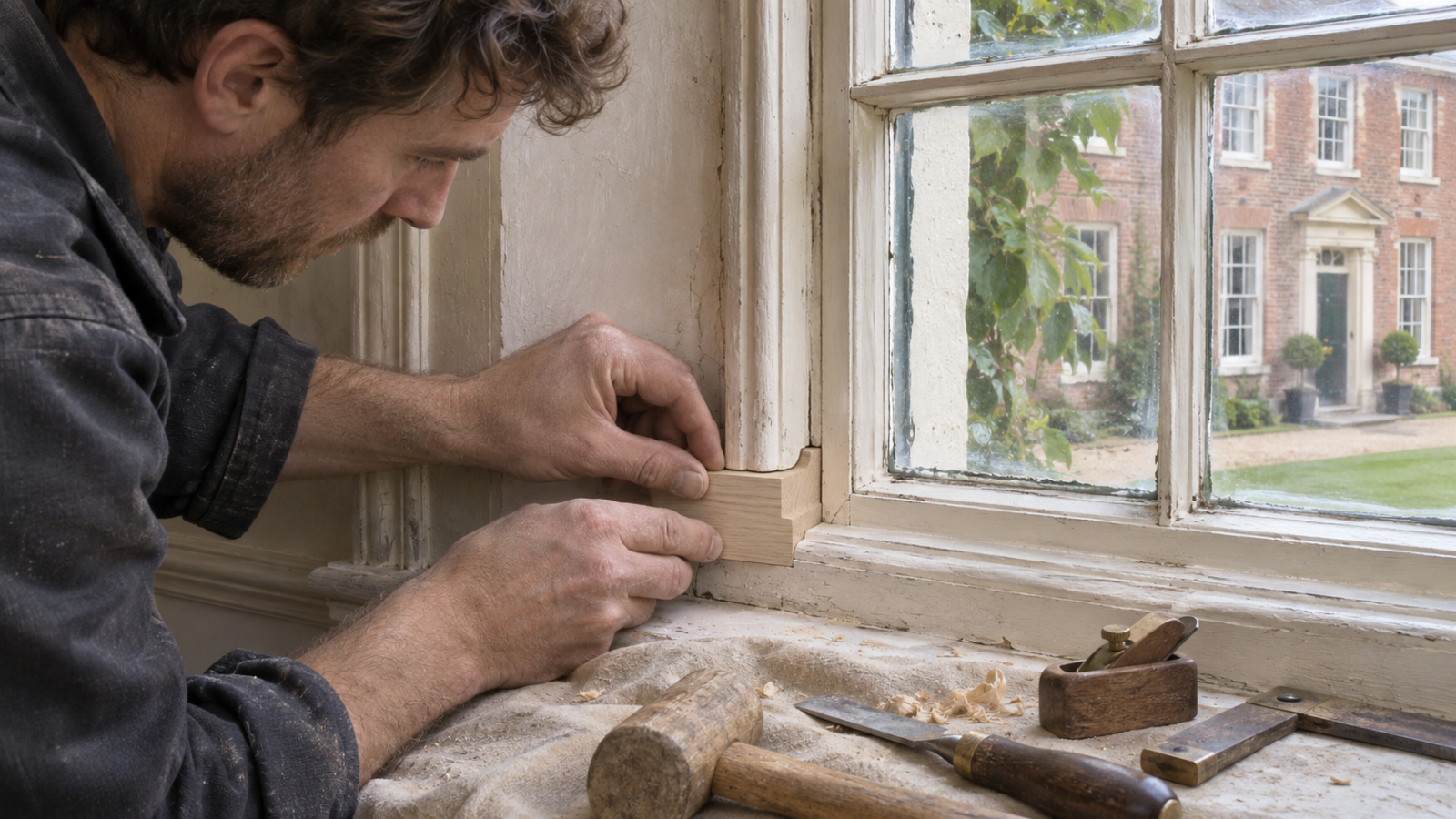
Repair options should be assessed before replacement is considered. Damage to one section of a feature does not necessarily mean the whole piece needs to be removed.
For example, a localised defect in a timber moulding may allow a carefully matched repair, preserving the surrounding material. Decorative plasterwork also needs assessment to establish whether damaged sections can be conserved.
The important questions are how much original material remains sound, what caused the damage and which repair method is appropriate.
HarriDec’s heritage approach prioritises retaining original fabric wherever practical. Our listed Georgian house restoration in Ongar illustrates how restoration and redecoration can be planned together.
How can preparation preserve delicate decorative details?
Preparation should suit the individual surface. An intricate cornice or moulded door surround requires different handling from a broad, flat wall.
Layers of paint can soften the appearance of decorative profiles. However, removing every coating is not automatically the right solution. Earlier finishes may contain evidence of the building’s history, and unnecessary stripping can damage the material beneath.
Where historic decoration is suspected, seek specialist assessment before removing it. Historic England highlights the importance of preserving earlier decorative schemes and original interior features. Historic England
Discuss the proposed preparation method with your decorator and consider a small trial area where appropriate. This can help establish how to achieve a sound surface while retaining the definition of the detail.
How do you choose colours for a period home?
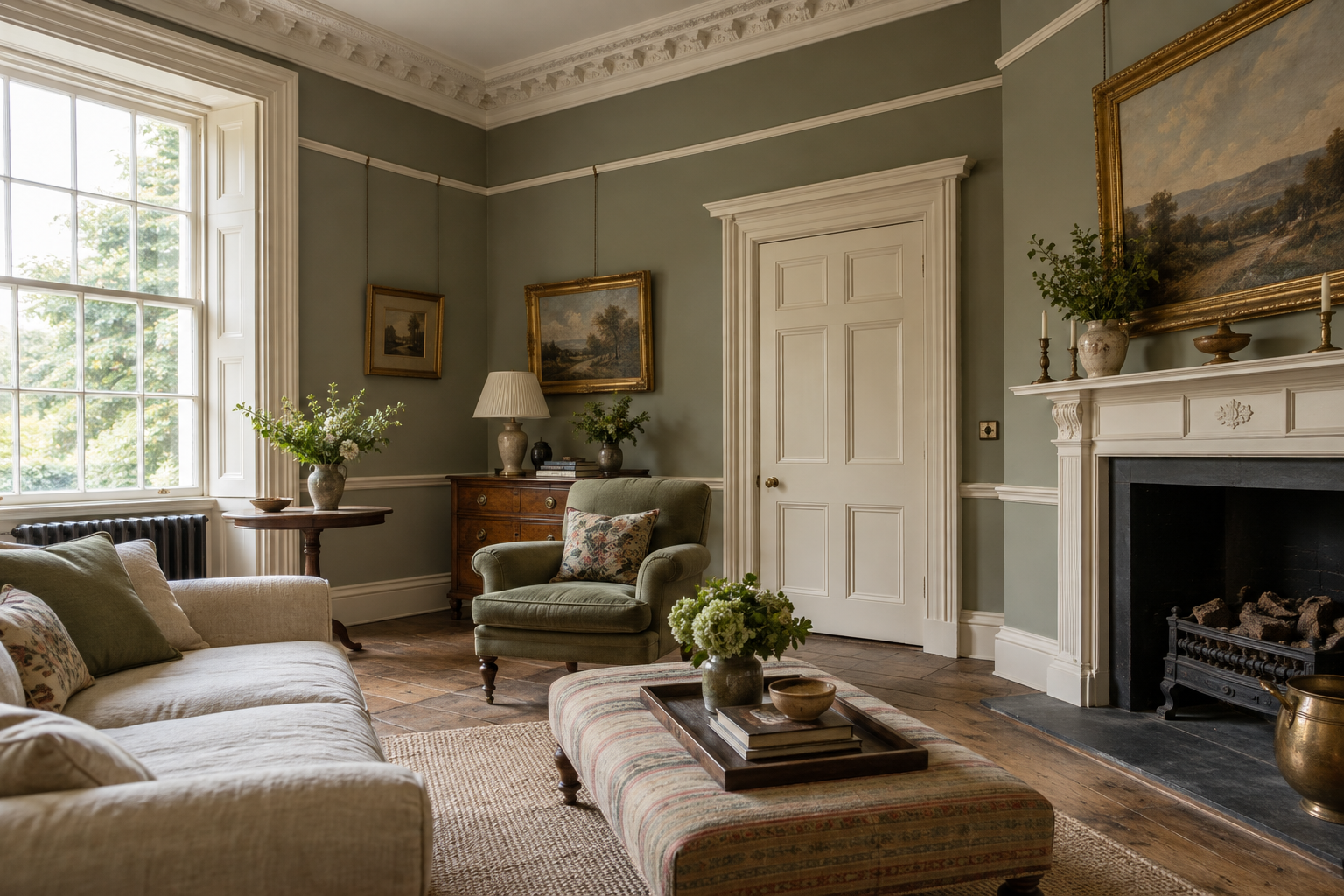
Choose colours in the context of the whole room. Ceiling height, flooring, fireplaces, woodwork and daylight all affect how a scheme feels.
Warm off-whites, stone shades, muted greens and deeper colours can provide useful starting points. These are design choices, however, rather than proof of what was originally used in your home.
A paint collection described as “heritage” does not establish historical accuracy for a particular property. If restoring an authentic decorative scheme is part of the brief, the colour choices should follow the available evidence.
For a more personal scheme, test generous samples before committing. Look at them in daylight and under your usual evening lighting, with the proposed woodwork colour alongside.
Pay attention to sheen as well as colour. The same shade can look noticeably different in a matt wall finish and a more reflective woodwork finish.
What makes fine decorating different?
Fine decorating depends on the quality of the work beneath the final coat as much as the paint itself.
Careful repairs, suitable preparation and a clear specification give the decorator a sound basis for the finish. The application then needs to respect the room’s architectural details.
Look for consistent coverage across mouldings, neat colour boundaries and carefully finished junctions around doors, skirting boards and fittings.
It is also worth agreeing what the finished surface should look like. An older room may have subtle irregularities that form part of its character. Decisions about smoothing or retaining them should be made deliberately, after checking whether they indicate defects.
HarriDec’s interior decorating service considers the preparation, detailing and complete colour scheme together.
Do you need listed building consent for interior decorating?
Listed building consent is required for alterations that affect a listed building’s special architectural or historic character. This can include work inside the property.
Do not assume that work is exempt simply because it is described as decorating. Removing historic finishes or changing original features may have implications for consent.
Check the proposed scope with your local planning authority before starting, particularly where significant decorative surfaces or architectural details could be affected. Historic England confirms that the requirement can apply to interior work as well as exterior changes. Historic England
Frequently asked questions
Can you use contemporary colours in a period home?
Yes, a contemporary palette can work well alongside retained period features. Consider the room’s proportions and materials, test the colours in different lighting and check any relevant requirements if the property is listed.
Should original woodwork always be stripped back to bare timber?
No. Existing finishes should be assessed before removal. Stripping may be unnecessary, and earlier painted or stained finishes can be an important part of the building’s character.
Should every uneven wall be made perfectly smooth?
That depends on the surface, its condition and the agreed finish. Investigate defects first, then decide which irregularities should be repaired and which can be retained as part of the room’s appearance.
What information should you provide when requesting a quotation?
Explain which rooms need decorating, whether the property is listed, which features you want to preserve and any known issues. Photographs and a clear outline of your preferred finish will help the initial discussion.
Planning a period property decorating project in Essex?
HarriDec specialises in heritage restoration and fine decorating, combining careful attention to original features with considered preparation and finishing.
Whether you want to refresh a single room or plan a wider decorating scheme, contact HarriDec to discuss your period property. Tell us about the building, the details you want to preserve and the result you would like to achieve.