As summer gives way to autumn, the first cooler evenings often reveal problems that were easy to overlook during warmer weather. A faint rattle, a cold current around the frame or a sash that no longer closes properly can all become much more noticeable once the heating is switched on.
Traditional sash windows were made to last and many have already served their homes for well over a century. Feeling a draught does not automatically mean they need replacing. In many cases, careful maintenance, localised timber repairs and discreet draught-proofing can improve comfort while retaining the original glass, joinery and character of the property.
Why Do Sash Windows Become Draughty?
Sash windows contain moving parts, so small gaps are part of their construction. Over time, however, those gaps can become wider as timber moves, paint layers build up and components wear.
Worn sash cords, loose beads, unbalanced weights and tired ironmongery can prevent the window from sitting correctly within its frame. Previous repairs may also have altered the fit. In some cases, decay around the sill or lower frame allows further movement and lets air or rainwater enter.
The aim should not be to seal every opening without understanding the window. Older buildings need managed ventilation, and blocking airflow indiscriminately can contribute to condensation and moisture problems. A proper assessment identifies unwanted air leakage while allowing the building to continue performing as it should.
Warning Signs to Check in Early Autumn
You do not need to wait for a freezing day to find out whether your windows need attention. On a cool or breezy morning, check each sash for the following:
- Cold air around the meeting rails, staff beads or parting beads
- Rattling glass or sashes when it is windy
- A window that sticks, drops shut or will not remain open
- Broken or fraying sash cords
- Flaking paint, open joints or softened timber around the sill
- Loose or cracked glazing putty
- Water staining beneath the window after rain
- Excessive noise or dust entering around the frame
A small area of failed paint or putty may appear cosmetic, but it can expose timber to moisture. Once water reaches an open joint, decay can develop behind an otherwise sound-looking surface. Early attention usually allows for a more contained repair.
Repairing Rather Than Replacing Original Windows
Historic windows contribute far more to a period property than their shape alone. The proportions of the glazing bars, subtle variations in old glass and evidence of traditional workmanship are difficult to reproduce accurately in a modern replacement.
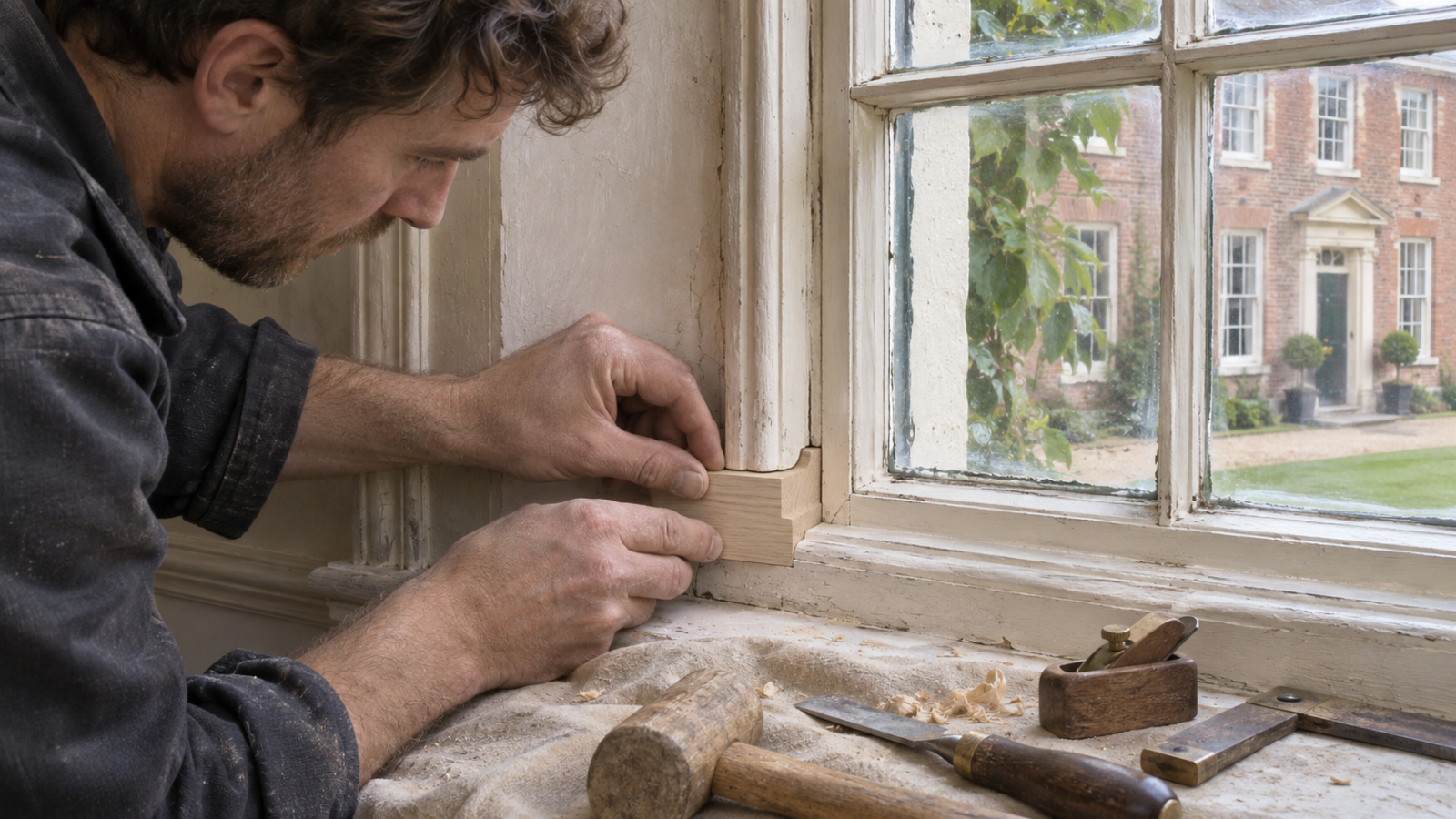
Fortunately, apparent deterioration is often localised. Decayed sections of a sill, frame or glazing bar can frequently be cut back and repaired using matching timber splices or suitable repair materials. Loose putty can be renewed, worn cords replaced and the sash rebalanced so that it moves smoothly and closes correctly.
This repair-first approach retains more of the original fabric and avoids discarding an entire window because one small section has failed. Once preparation and repairs are complete, an appropriate paint system protects the timber and provides a clean, durable finish.
How Professional Draught-Proofing Works
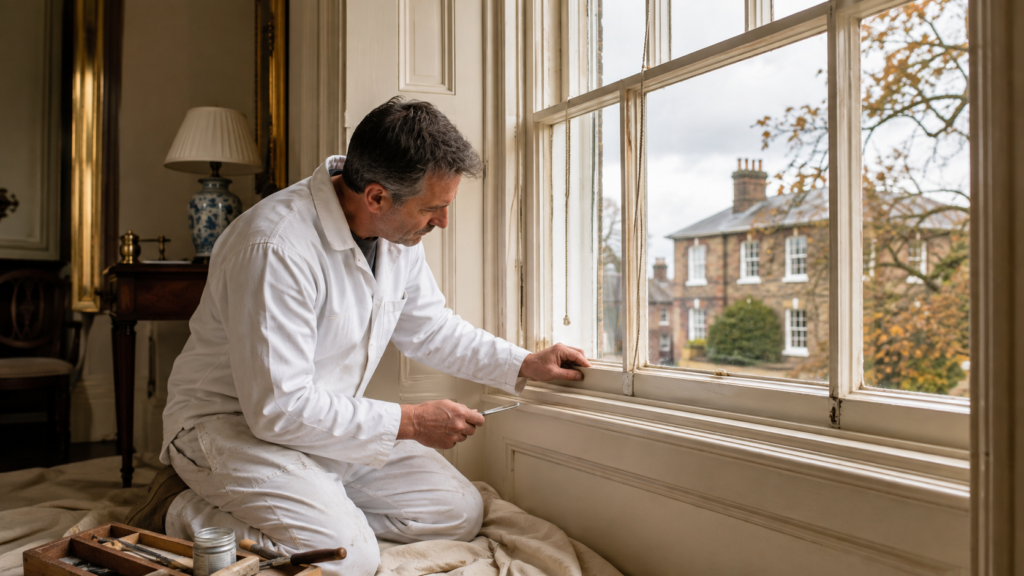
Professional sash window draught-proofing is more considered than applying visible self-adhesive strips around the frame. The sashes are assessed and overhauled so that faults in their operation are corrected first.
Discreet brush seals can then be fitted within new or adapted staff and parting beads. These seals close unwanted gaps while remaining largely hidden. Correctly installed, they can reduce cold currents, rattling, outside noise and dust without spoiling the appearance of the window.
The work may also include servicing pulleys and locks, renewing sash cords, adjusting weights and carrying out localised timber or glazing repairs. The result should be a window that opens properly, closes securely and feels noticeably less draughty, rather than one that has simply been painted shut or covered with temporary seals.
Take Extra Care With Listed Buildings
Owners of listed properties and homes in conservation areas should check whether permission is needed before altering historic windows. Like-for-like maintenance and repair will not usually be treated in the same way as replacement or a material alteration, but the position depends on the building and the proposed work.
Before changing glazing, removing original joinery or introducing a new window system, seek advice from the local planning authority or conservation officer. A specialist can help define a repair method that preserves significant fabric and provides the information needed for any consent application.
Arrange an Inspection Before Colder Weather Arrives
Early autumn is a useful time to assess sash windows because draughts are beginning to show, while there may still be suitable conditions for external timber repairs and redecoration. It also allows problems to be addressed before rooms become uncomfortable and winter weather places further strain on exposed joinery.
HarriDec restores and draught-proofs traditional sash windows in period and listed properties across Ongar, Brentwood and Essex. The emphasis is on retaining original materials wherever practical, correcting the cause of the problem and using methods suited to the age and character of the building.
If your windows rattle, stick, admit cold air or show signs of timber decay, contact HarriDec to arrange an assessment and discuss the most appropriate repair.
Suggested internal links
- Sash window draught-proofing: https://www.harridecltd.com/sash-window-draught-proofing/
- Historic and listed building restoration: https://www.harridecltd.com/historic-and-listed-buildings/
- Exterior painting: https://www.harridecltd.com/exterior-painting/
- Contact HarriDec: https://www.harridecltd.com/contact-us/