When a wall is cracked, hollow or stained, it is tempting to remove the damaged surface and replace it with a modern plaster system. In an older property, that decision deserves more thought.
When comparing lime plaster vs gypsum plaster, smoothness and drying time are not the only factors. The material must suit the wall’s construction, moisture behaviour and any original plaster that remains. The wrong repair can lead to further cracking, trapped moisture or the needless loss of historic fabric.
Why the Plaster Choice Matters in an Older Home
Many period properties have solid brick, stone, timber or earth walls, without modern cavities and damp-proof systems. They absorb moisture and release it when conditions allow.
Traditional lime mortar, render and plaster form part of that system. They are relatively permeable and accommodate some movement, while a harder or incompatible repair can alter how the wall behaves.
Age alone does not provide the answer. One house may contain original lime plaster, later gypsum repairs and a modern extension. Each area should be assessed before work starts.
How Lime Plaster Works With Traditional Walls
Lime plaster uses lime as the binder, combined with suitable aggregates and, in some traditional applications, hair or another reinforcement. The mix and number of coats must suit the background and existing construction.
Its pore structure allows moisture to move through the surface. This is commonly called breathability, although lime is not a cure for damp. Leaking gutters, failed pointing, plumbing defects, high ground levels and poor ventilation must still be investigated.
Lime tends to be more flexible than hard modern plasters, making it suitable for traditional walls and timber laths that move gently. Its softer texture can retain the character of an older interior. Correct preparation and curing are essential before decoration.
When Gypsum Plaster May Be Suitable
Gypsum plaster sets quickly and creates a smooth, consistent surface. It is often appropriate in modern properties, extensions, plasterboard partitions and other dry, stable backgrounds designed for modern materials.
Gypsum can also occur in genuinely historic work, so its presence does not automatically indicate a poor modern repair.
Problems arise when a modern system is applied without considering the background, surrounding materials and moisture. A hard patch within softer lime may respond differently to movement and drying, causing cracks around the repair. The question is not whether gypsum is always bad for old houses, but whether it is compatible with that particular wall.
Signs Your Existing Plaster Needs Assessment
Not every crack or hollow sound means an entire wall must be stripped. Local repair may be possible, particularly when most original plaster remains sound. Seek specialist assessment if you notice:
- plaster bulging or separating from the background
- recurring cracks around previous repairs
- crumbling plaster or persistent salt deposits
- staining, peeling paint or wallpaper that will not stay attached
- hard patches surrounded by softer original plaster
- damage that returns shortly after redecoration
These symptoms do not prove the plaster is the underlying cause. Moisture entry, structural movement, poor ventilation or an unsuitable coating may be contributing. Repairing the surface without finding the cause can allow the problem to return.
Why Repair Is Often Better Than Replacement
Original lime plaster forms part of a building’s fabric and character. Minor undulations, tool marks and changes in texture contribute to the appearance of a period room. Removing sound material simply to obtain a perfectly flat wall can destroy details that are difficult to recreate.
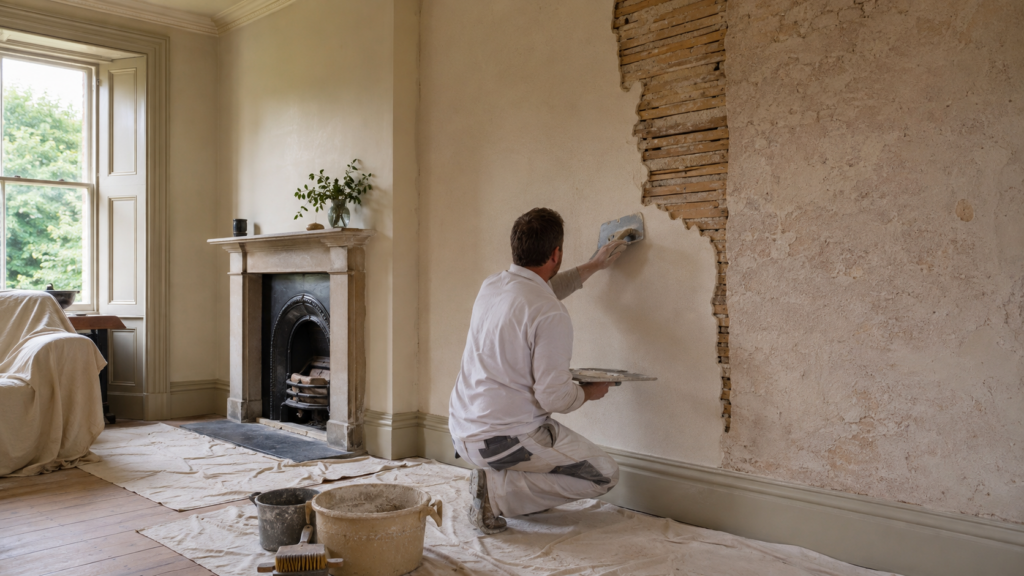
A repair-led approach retains stable plaster where possible. Loose areas may sometimes be resecured, while failed sections can be removed and patched with a compatible mix. The background, edges and suction must be prepared correctly for the repair to bond and dry.
HarriDec’s restoration of a listed Georgian house in Ongar demonstrates this wider principle. Inappropriate modern coatings were removed and damaged lime areas repaired using compatible materials, retaining as much original fabric as possible.
Choosing the Correct Plaster Before Decorating
The finish over a repair matters as much as the plaster beneath it. A permeable lime surface can lose much of its drying ability beneath an unsuitable impermeable coating.
Before specifying a system, a specialist may consider:
- the age and construction of the wall
- whether the existing plaster is lime, gypsum or a combination
- the condition of the background
- moisture sources, salts and ventilation
- the properties of adjoining materials
- any important historic finishes
- the proposed paint, limewash or wallpaper
Owners of listed properties should check whether proposed work could affect the building’s special interest. Consent depends on the building and the nature of the work, so advice should be sought before significant removal or alteration. HarriDec’s historic and listed building restoration service explains its conservation-led approach.
Specialist Lime Plaster Repairs in Essex
There is no universal winner in the lime plaster vs gypsum plaster comparison. Modern gypsum has many appropriate uses, but traditional walls often perform best when repairs match the materials and behaviour of the original construction.
HarriDec provides lime plastering and lime plaster repairs for period, historic and listed properties across Essex. If you have cracked, loose or previously repaired plaster in Ongar, Brentwood or elsewhere in the county, contact HarriDec to arrange an assessment and discuss a sympathetic repair.